From Jobs to Togetherness: Daily Living Support in Cozy Senior Care Settings
Business Name: BeeHive Homes of Floydada TX
Address: 1230 S Ralls Hwy, Floydada, TX 79235
Phone: (806) 452-5883
BeeHive Homes of Floydada TX
Beehive Homes assisted living care is ideal for those who value their independence but require help with some of the activities of daily living. Residents enjoy 24-hour support, private bedrooms with baths, medication monitoring, home-cooked meals, housekeeping and laundry services, social activities and outings, and daily physical and mental exercise opportunities. Beehive Homes memory care services accommodates the growing number of seniors affected by memory loss and dementia. Beehive Homes offers respite (short-term) care for your loved one should the need arise. Whether help is needed after a surgery or illness, for vacation coverage, or just a break from the routine, respite care provides you peace of mind for any length of stay.
1230 S Ralls Hwy, Floydada, TX 79235
Business Hours
There is a minute I think of often from my early years working in senior care. A resident, Mrs. Alvarez, sat at the dining table with a folded napkin and a fork, waiting. A new assistant, excited to help, cut her chicken into small pieces and moved the plate better. Entirely well intentioned. Mrs. Alvarez looked up and stated, rather calmly, "You just eliminated the only thing I do for myself at dinner."
That single sentence is the heart of good everyday living assistance in assisted living and other senior care environments. The work is not only about completing tasks. It has to do with securing small islands of self-reliance, producing psychological safety, and structure authentic togetherness in what are, after all, individuals's homes.
Cozy, relationship‑centered elderly care does not happen by mishap. It grows out of numerous small decisions about how we help someone shower, sip tea, find their sweater, or select where to sit. Daily living support is the phase where all those worths end up being visible.
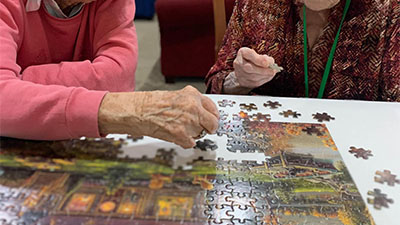
What "relaxing" really suggests in senior care
People utilize the word "comfortable" so delicately that it begins to seem like a marketing term. In practice, a cozy senior care setting has really specific, concrete qualities.
The physical environment is generally smaller scale, less scientific, and more individual. That may mean 20 residents instead of 80, or different "families" of 10 to 15 within a larger building. Furnishings appears like something you would in fact have at home. Lighting is warm. Hallways are brief. Homeowners can orient themselves without a maze of corridors and signage.
More importantly, routines seem like a home, not a shift schedule. You do not see a line of wheelchairs outside a restroom at 7:30 a.m. Waiting on "morning care." People wake according to their own rhythms. Breakfast is stretched over an hour or two, not dealt with as a logistical obstacle to clear. Staff know who likes to check out the paper initially and who desires peaceful till coffee kicks in.
In these environments, daily living assistance is woven into daily life rather of provided like a service call. An aide might fold laundry along with a resident, chatting about grandchildren. A nurse may sit at the very same table to help somebody with medications, not tower above them with a cup and a paper cup of pills.
Cozy does not imply ideal. It does mean small adequate and relational enough that a resident's preferences can in fact shape the day.
From tasks to togetherness: what daily living assistance truly involves
Families typically get here to assisted living tours equipped with a list: help with bathing, grooming, dressing, medication suggestions, maybe mobility or continence care. Those are vital. You ought to anticipate every good senior care setting to deal with those reliably.
What tends to amaze individuals is how broad daily living support becomes when someone relocations in. Gradually, staff routinely help with:
- Choosing appropriate clothing for weather and events
- Organizing closets, nightstands, and drawers so items are simple to find
- Managing glasses, hearing aids, and dentures, consisting of cleaning and storage
- Coordinating journeys to the beauty salon, podiatry, and medical appointments
- Supporting sleep regimens and night‑time reassurance
That is the very first of the 2 permitted lists. I will not use more than another list in this article.
These activities are not just "extras." They are the connective tissue that holds someone's days together. When clothes are laid out with care and discussed ("It is a bit chilly this morning, I brought your blue sweatshirt also"), a resident feels oriented and respected. When hearing aids are regularly examined, they can really take part in conversation instead of rest on the edge of a group, smiling vaguely.
The "togetherness" piece shows up when support is given in a way that fosters collaboration instead of dependency. Staff welcome, cue, and work together rather of silently taking control of. You might hear, "Would you like to start with washing your face while I get the water just right?" or "Let's stand together on three," instead of, "I am going to clean your face now" or "Up you go."
In strong communities, daily living assistance turns into shared routines. A particular caregiver understands precisely how Mrs. Patel likes her hair pinned. 2 homeowners constantly assist clear the dessert plates after lunch, under staff supervision. A retired instructor is asked to read the menu aloud in the dining-room. These modest functions develop a sense of function that no activity calendar can completely replicate.
A day in the life when assistance is done well
It assists to picture an ordinary day in a cozy assisted living or small senior care home.
Morning does not start with a blasting overhead statement. Rather, personnel have a wake‑up plan based upon each resident's sleep routines. Mrs. Johnson, an early riser her whole life, has her blinds opened around 6:45 a.m., with soft knocking and a familiar voice. Mr. Wright, who sleeps lightly, is left until after 8 unless he demands otherwise.
Assistance with dressing takes place at the bedside or in the bathroom, not in a rush. The very best caregivers use the time to sign in mentally: "How did you sleep?" "Are your knees bothering you more today?" Someone who can still button a shirt is offered the time to do it. If arthritis flares, personnel quietly action in without making a fuss.
Breakfast smells carry down the corridor. Homeowners show up in different ways: strolling separately, with a walker, or accompanied by an employee. Those who need more support with movement or continence are assisted behind the scenes so they can come to the table with dignity maintained.
Throughout the day, daily living support blurs into social life. A caregiver might bring a small group together to water plants, which also takes place to be a good opportunity to measure fluid consumption and energy levels. Somebody repositions a resident's chair in the lounge so they can better see the television and also join discussion. When the mail gets here, staff aid those with visual or cognitive difficulties sort through cards and letters, using the moment to prompt reminiscence and connection.
Even evenings can be structured around convenience and regimen. In a well run, comfortable setting, you rarely see everyone rounded up to bed at the same time. Some residents like to enjoy the late news. Others prefer music or a warm drink. Night staff discover who needs a quick check around midnight and who gets restless if woken unnecessarily. That knowledge, developed gradually, makes the distinction between nights filled with anxious call lights and nights that feel peaceful.
None of this is spectacular. It is just thoughtful care, repeated consistently.
Assisted living, respite care, and when each makes sense
Families often ask whether assisted living, respite care, or staying at home with help is "best." There is no universal answer. The right choice depends on needs, character, financial resources, and the household's own limits.
Assisted living works well when somebody needs routine aid with everyday activities, some supervision for security, and a sense of community, but does not need the strength of a nursing home. In lots of areas, locals can receive increasing levels of support within assisted living, including coordination with home health or hospice suppliers, as needs grow.
Respite care is short‑term, normally from a couple of days up to a month or 2. It can occur in an assisted living neighborhood, a devoted respite program, or even in a nursing home bed reserved for that function. For families, respite care is frequently a pressure release valve. A main caregiver who has actually been offering elderly care in your home may need to recuperate from surgery, go to a grandchild's wedding event, or merely rest from the physical and psychological strain.
In a comfortable setting, respite visitors are not treated as temporary afterthoughts. They are folded into day-to-day rhythms, invited to activities, and supported in the very same way full‑time residents are. I have actually seen respite remains that started as "just two weeks while my daughter takes a trip" become long‑term relocations since the person bloomed socially as soon as surrounded by peers.
There are also times when staying home with intermittent aid and family support makes one of the most sense. Some people are extremely personal or deeply attached to their home environment. Others live in multigenerational families where assistance is already constructed in.

The decision point often comes when home arrangements can no longer provide safe daily living assistance, even with adjustments. Repetitive falls, medication mistakes, roaming, caretaker burnout, or unmanaged seclusion are all signals that more structured senior care might be much safer and kinder, both to the older grownup and to the family.
The art of helping without taking over
The hardest skill for brand-new caretakers to find out is restraint. When you are accountable for eight or ten residents throughout a morning shift, it can feel effective to step in and "do for" instead of "make with." That is exactly how independence erodes.
Good elderly care needs a constant, quiet evaluation of what somebody can still handle, even if it takes more time. A resident who can pull on socks with a dressing help ought to be encouraged to do so, even if the task includes a minute or more. For somebody with mild dementia, a basic verbal hint ("Next is your t-shirt, it is ideal by your left hand") might be all that is required, instead of full physical assistance.
There is a balance to keep. Some citizens feel humiliated by their restrictions and desire more assistance than strictly required, specifically in early days after a relocation. Others insist they can handle well beyond what is safe. Both reactions are understandable.
Staff in high quality assisted living settings utilize clear, respectful interaction to negotiate that line. You may hear:
"I know you value doing your own brushing. How about I constant your arm a bit, and you take the lead?"
"I am worried about you standing right now when you feel woozy. Let me bring the chair closer so you can sit and still reach your closet."
Those small settlements preserve dignity. They likewise develop trust, which is the foundation for any deeper sense of togetherness.
Relationships, not simply ratios
Families frequently concentrate on personnel ratios when comparing neighborhoods. Numbers matter. A relaxing senior care setting with one caretaker for 15 citizens during hectic early morning hours is going to struggle. But ratios alone do respite care not produce the feeling of togetherness that families and homeowners hope for.
Stability of staffing is just as crucial. When the very same assistants, nurses, and activity staff show up over months and years, they accumulate a deep, nearly intuitive understanding of homeowners' choices and baseline behaviors. They understand that if Mr. Lewis declines his shower, something is probably bothering his arthritic shoulder. They recognize that when Ms. Chen pushes her plate away early, she might be brewing a urinary tract infection.
The finest communities purposefully secure constant tasks, so the very same personnel look after the same group of homeowners. This continuity permits real relationships to develop. Daily living assistance begins to seem like a familiar dance: small jokes, shared history, understanding when to give space and when to sit down and listen.

Training also matters. Cozy does not indicate casual. Staff in strong programs receive continuous education in dementia care, safe transfers, interaction techniques, and recognizing subtle indications of health problem. When training is coupled with a culture that values kindness and curiosity, the outcome is assistance that feels both competent and gentle.
Special situations: dementia, movement, and personality
Not every resident arrives with the same requirements, and relaxing care needs to flex.
For those living with dementia, daily living assistance needs to be structured and reassuring without ending up being rigid. Foreseeable regimens reduce stress and anxiety. Visual cues, such as setting out clothing in the order it will be put on, assist make up for memory gaps. Personnel discover to analyze behavior: resistance to bathing may show worry of water or distress about temperature level instead of "stubbornness." Gentle explanation and step‑by‑step assistance usually work far much better than repeated urgent commands.
Mobility difficulties bring their own complexities. Safe transfers and usage of walkers, walking sticks, or wheelchairs are non‑negotiable for preventing injury. At the exact same time, immobility can be separating if not handled thoughtfully. In a really cozy setting, staff search for ways to bring engagement to the person: small group activities held near somebody's preferred chair, card video games at a table that allows simple wheelchair gain access to, or brief strolls in the corridor included into day-to-day routines.
Personality is another underappreciated aspect. Not everyone craves group activities and consistent social interaction. Some homeowners are shy, easily overstimulated, or simply used to a quieter life. Togetherness has to permit that. A comfortable reading corner, a small terrace garden, or one‑on‑one discussions with personnel can supply meaningful connection without pressure to join every bingo video game or sing‑along.
Couples present both a chance and an obstacle. When one spouse requires more aid than the other, daily living assistance has to appreciate the much healthier partner's role without overburdening them. Sometimes that suggests staff silently handling more physical care so the couple can spend their energy on emotional nearness instead of logistics.
How to identify real togetherness when touring
When households tour assisted living or respite care alternatives, it is simple to get distracted by décor, menu boards, and activity calendars. Those are worth noting, however they do not tell you much about how day-to-day living assistance actually feels.
During visits, it assists to see closely and ask targeted questions. A short list can ground your impressions:
- Observe early morning or late afternoon if possible, when personal care is happening, not just mid‑day when whatever is tidy.
- Listen to how personnel talk to locals: Are they rushed and task focused, or do they utilize names, eye contact, and considerate, conversational tones?
- Ask how private regimens are dealt with: Can locals wake up and go to bed on their own schedules, or exists a fixed "lights out" time?
- Find out about staffing patterns and turnover: For how long have actually most caretakers existed, and do they work with the very same citizens consistently?
- Ask for concrete examples of how the community supports both self-reliance and security in everyday tasks.
That is the second and last list in this post. I will keep the rest in prose.
You discover a good deal by merely being in a common area for 20 or 30 minutes. Do citizens look engaged, at ease with staff, and comfy in their surroundings? Exists laughter, or does the space feel tense and quiet? Are call lights going unanswered for long stretches, or do you see timely, calm responses?
One of the most telling indications is how personnel manage small mishaps. A spilled beverage, a dropped napkin, a confused question. In environments built on togetherness, you see fast, kind help without any hint of annoyance or phenomenon. The resident's self-respect is protected first, the mess second.
Supporting togetherness as a household member
Even in the very best settings, households play an important function in shaping day-to-day living support. Personnel can not understand what your mother's "normal" appears like on the very first day. They rely on you to fill the gaps.
In my experience, households who take a collaborative method tend to see the best outcomes. They share useful information: the precise tea their father chooses, the song that soothes their aunt's stress and anxiety, the morning regimen that has worked for decades. They also keep staff updated when medical conditions alter or new stressors appear.
It assists to keep in mind that personnel are frequently managing lots of requirements simultaneously, within regulatory and organizational constraints. Approaching discussions as problem‑solving together, rather of as customer complaints, opens more doors. Stating, "I have seen Mom seems more withdrawn at supper. Can we brainstorm methods to support her?" welcomes collaboration. It is really different from, "You require to fix this."
For households utilizing respite care, there is an additional layer of emotion. Short stays can stir regret: "I ought to have the ability to do this myself." In reality, taking scheduled breaks is frequently what makes long‑term caregiving sustainable. When respite is ingrained within a warm, mindful environment, it can become a reset point not just for the caregiver but for the older adult, who may take pleasure in a modification of landscapes, new conversations, and fresh activities.
Bringing it back to relationships
Strip away the policies, layout, and care plans, and what stays in any senior care setting is a network of relationships. Residents with each other. Personnel with homeowners. Households with personnel. When daily living support is delivered in a task‑only mindset, those relationships remain thin and fragile. Individuals feel "cared for" in the narrow sense however not known.
Cozy assisted living and well created respite programs aim for something deeper. They utilize the requirements of elderly care - dressing, bathing, meals, medications, mobility - as everyday chances to link. A brush through somebody's hair becomes a possibility to discuss a dance they attended in 1958. Helping with cream becomes a discussion about a preferred vacation spot. Guiding hands to button a cardigan is coupled with support about what the individual still does well.
None of this eliminates the tough parts. Aging can bring discomfort, loss, disappointment, and worry. Senior care will never ever be just soft lighting and friendly chats. There are toileting emergencies, sleepless nights, and hard behaviors. There are budget plan constraints and staffing lacks. Pretending otherwise does everybody a disservice.
What does make an extensive distinction is the objective behind each interaction. When the goal is not simply to get somebody dressed however to help them seem like themselves as they start the day, the quality of support changes. When personnel are supported and valued enough to decrease for a resident's story rather than rush to the next room, a sense of togetherness grows that you can feel when you walk in the door.
For households searching for the ideal location, or experts working to enhance their own communities, that is the standard worth going for. Not excellence, however a type of daily hospitality where care tasks and human connection are woven together, one small act at a time.
BeeHive Homes of Floydada TX provides assisted living care
BeeHive Homes of Floydada TX provides memory care services
BeeHive Homes of Floydada TX provides respite care services
BeeHive Homes of Floydada TX supports assistance with bathing and grooming
BeeHive Homes of Floydada TX offers private bedrooms with private bathrooms
BeeHive Homes of Floydada TX provides medication monitoring and documentation
BeeHive Homes of Floydada TX serves dietitian-approved meals
BeeHive Homes of Floydada TX provides housekeeping services
BeeHive Homes of Floydada TX provides laundry services
BeeHive Homes of Floydada TX offers community dining and social engagement activities
BeeHive Homes of Floydada TX features life enrichment activities
BeeHive Homes of Floydada TX supports personal care assistance during meals and daily routines
BeeHive Homes of Floydada TX promotes frequent physical and mental exercise opportunities
BeeHive Homes of Floydada TX provides a home-like residential environment
BeeHive Homes of Floydada TX creates customized care plans as residents’ needs change
BeeHive Homes of Floydada TX assesses individual resident care needs
BeeHive Homes of Floydada TX accepts private pay and long-term care insurance
BeeHive Homes of Floydada TX assists qualified veterans with Aid and Attendance benefits
BeeHive Homes of Floydada TX encourages meaningful resident-to-staff relationships
BeeHive Homes of Floydada TX delivers compassionate, attentive senior care focused on dignity and comfort
BeeHive Homes of Floydada TX has a phone number of (806) 452-5883
BeeHive Homes of Floydada TX has an address of 1230 S Ralls Hwy, Floydada, TX 79235
BeeHive Homes of Floydada TX has a website https://beehivehomes.com/locations/floydada/
BeeHive Homes of Floydada TX has Google Maps listing https://maps.app.goo.gl/VQckTu3ewiBFL32A7
BeeHive Homes of Floydada TX has Facebook page https://www.facebook.com/BeeHiveHomesFloydada
BeeHive Homes of Floydada TX has an Youtube page https://www.youtube.com/@WelcomeHomeBeeHiveHomes
BeeHive Homes of Floydada TX won Top Assisted Living Homes 2025
BeeHive Homes of Floydada TX earned Best Customer Service Award 2024
BeeHive Homes of Floydada TX placed 1st for Senior Living Communities 2025
People Also Ask about BeeHive Homes of Floydada TX
What is BeeHive Homes of Floydada TX Living monthly room rate?
The rate depends on the level of care that is needed. We do an initial evaluation for each potential resident to determine the level of care needed. The monthly rate is based on this evaluation. There are no hidden costs or fees
Can residents stay in BeeHive Homes until the end of their life?
Usually yes. There are exceptions, such as when there are safety issues with the resident, or they need 24 hour skilled nursing services
Do we have a nurse on staff?
No, but each BeeHive Home has a consulting Nurse available 24 – 7. if nursing services are needed, a doctor can order home health to come into the home
What are BeeHive Homes’ visiting hours?
Visiting hours are adjusted to accommodate the families and the resident’s needs… just not too early or too late
Do we have couple’s rooms available?
Yes, each home has rooms designed to accommodate couples. Please ask about the availability of these rooms
Where is BeeHive Homes of Floydada TX located?
BeeHive Homes of Floydada TX is conveniently located at 1230 S Ralls Hwy, Floydada, TX 79235. You can easily find directions on Google Maps or call at (806) 452-5883 Monday through Sunday 9:00am to 5:00pm
How can I contact BeeHive Homes of Floydada TX?
You can contact BeeHive Homes of Floydada TX by phone at: (806) 452-5883, visit their website at https://beehivehomes.com/locations/floydada/,or connect on social media via Facebook or Youtube
Located near BeeHive Homes of Floydada TX Cinemark Tinseltown Lubbock and XD a great movie theater with full food & drink menu. Catch a movie and enjoy some great food while you wait.